#1. Schedule an appointment at the best clinic for varicose veins in Bethesda, Maryland
If you have spider veins or varicose veins, your first action should be to meet with a vein doctor. Most patients spend months and years trying to treat spider veins and varicose veins with home remedies and lifestyle changes, but none of that works. Some lifestyle changes may temporarily alleviate the symptoms of vein disease and make you feel better, but they can’t treat the root cause of varicose veins. The longer you delay your treatment, the worse the situation becomes — varicose veins are caused by an underlying chronic condition that worsens with time.
When you notice varicose veins, please schedule an appointment at the best clinic for varicose veins. You can find our state-of-the-art vein clinic at 10215 Fernwood Rd, Suite 301, Bethesda, Maryland, 20817. Our vein clinic is particularly suitable for patients in the National Capital Region — the vein clinic is located just outside of Washington, DC, in Silver Spring, Maryland. We also provide free insurance verification. Once you send us your details, our insurance team will verify the terms and conditions of your insurance plan. Please schedule an appointment at our vein clinic in Maryland.

#2. Our vein doctors examine your varicose veins and diagnose chronic venous insufficiency
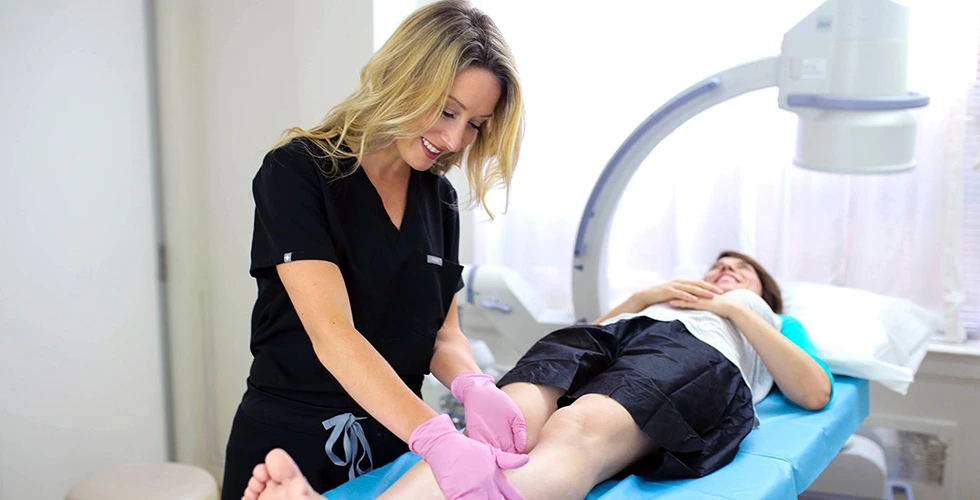
Your varicose vein treatment process will start with a thorough consultation with our vein doctors. Our board-certified and fellowship-trained vein doctors will carefully examine your leg veins, discuss your goals, ask about your symptoms, and review your medical history. Please inform your vein doctor if you notice the signs and symptoms of vein disease, such as restless leg syndrome, frequent leg cramps, leg swelling, leg pain, and leg heaviness, especially at the end of the day or after long periods of sitting or standing.
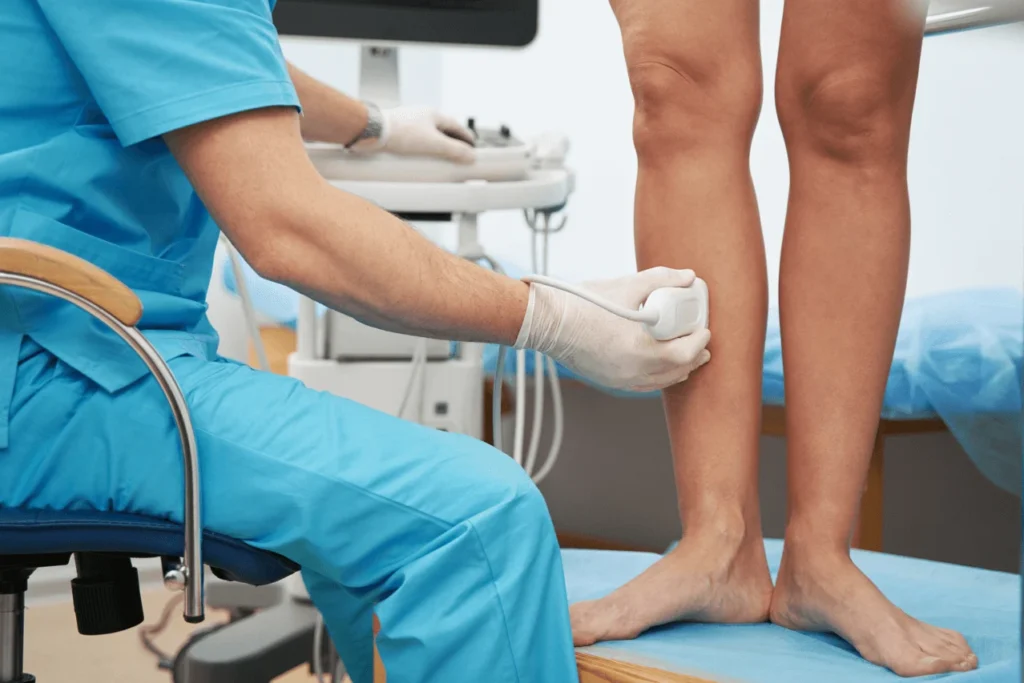
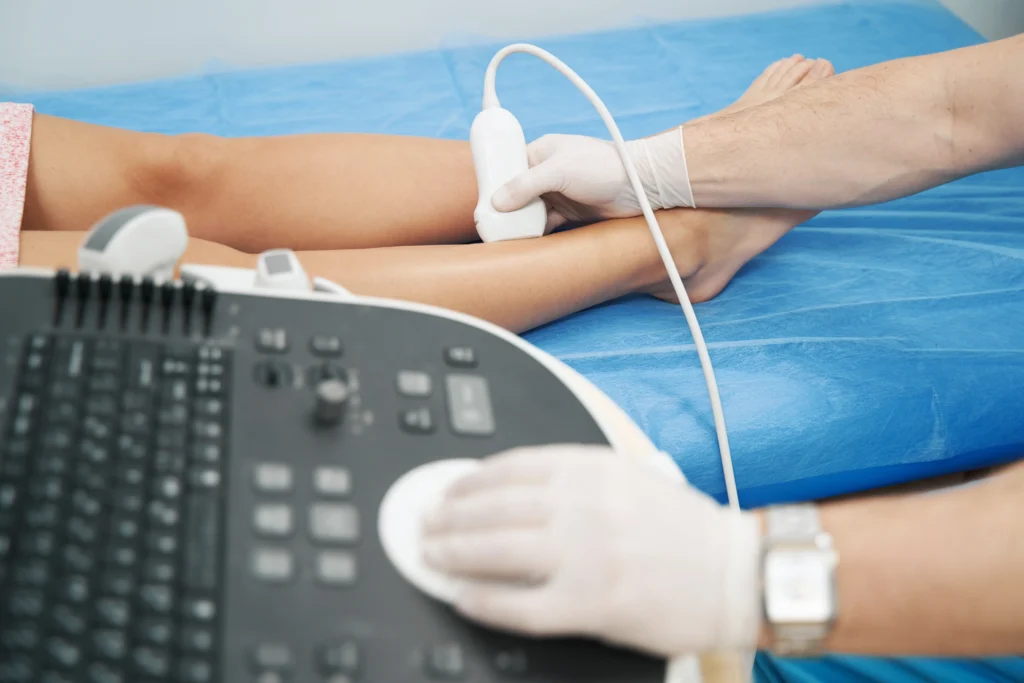
After examining your leg veins, the vein doctor will administer advanced vascular imaging tests, such as the duplex ultrasound scan. The vein doctor or ultrasound technician will apply a gel-like substance to your legs, following which a handheld device will be moved over your legs. The device will release ultrasound energy to visualize the direction of blood flow in your leg veins on a computer screen. The vein specialist will interpret the images on the screen to determine if you have chronic venous insufficiency, the root cause of most vein problems.
#3. We curate personalized treatment plans for varicose veins and the underlying vein disease
After diagnosing the root cause of your vein problems, the vein doctor will curate a personalized vein treatment plan for you. Instead of offering a cookie-cutter treatment plan, our vein doctors personalize the treatment plan according to the location and size of your varicose veins, the root cause of your symptoms, your lifestyle factors, medical history, and family history. The vein doctor will also explain your vein treatment options, highlight the pros and cons of each vein treatment option, and keep you looped into every stage of the process.
#4. We treat vein disease using the latest minimally invasive vein treatments
If you have chronic venous insufficiency, your vein treatment will start with one of the following minimally invasive procedures: endovenous laser ablation, radiofrequency ablation, and venaseal. All of these minimally invasive procedures have the same underlying goal, which they pursue via different techniques. The primary goal is to destroy or collapse the diseased saphenous vein responsible for your vein problems. Once the diseased vein is neutralized, the accumulated blood automatically flows into healthier leg veins to restore optimal blood flow.
Endovenous laser ablation and radiofrequency ablation treat the root cause of your vein problems using laser or thermal energy. The vein doctor makes a small incision on the skin’s surface to insert a specialized catheter into the diseased vein. The catheter generates thermal energy or laser energy to destroy the vein, rerouting the accumulated blood into healthier veins. During VenaSeal, however, the vein doctor injects a medical adhesive into the diseased vein, turning the vein into hardened scar tissues eventually metabolized by the body.
#5. We use cutting-edge techniques to remove superficial varicose veins and spider veins
Treating chronic venous insufficiency is an essential part of the varicose vein treatment process. If your vein doctor treats varicose veins without addressing the root cause of the problems, your varicose veins will simply return. Treating varicose veins and spider veins without addressing underlying vein disease is sort of like painting over a stained wall instead of fixing the leaky pipes underneath — the stains (or spider veins) will inevitably return. Our comprehensive approach to vein care, however, minimizes the risk of recurrence.
After treating vein disease, our vein doctors use cutting-edge, minimally invasive procedures to remove the superficial varicose veins and spider veins. Ambulatory phlebectomy is the ideal minimally invasive procedure for varicose veins. The vein doctor makes extremely small incisions on the skin’s surface to manually extract the unwanted varicose veins. Sclerotherapy, meanwhile, is suitable for spider veins — the vein doctor injects a sclerosant medicine into the spider veins to turn them into hardened scar tissues metabolized by the body.
#6. You can resume your daily activities and work immediately after your varicose vein treatments
You can resume your daily activities and work immediately after minimally invasive vein treatments. Minimally invasive procedures usually conclude within an hour and involve no downtime. You will have to wear compression stockings for a few weeks to reduce swelling and improve your recovery, and you’ll be asked to avoid strenuous workouts and heavy lifting for a week. But you can resume your daily activities and work immediately. The convenience of minimally invasive vein treatments makes them highly accessible.