How to treat early varicose veins?
If you have varicose veins, you’re not alone. In the United States, about 3 in 10 adults have varicose veins, according to the National Institutes of Health. You can implement several lifestyle changes to reduce early varicose veins and prevent them from getting worse.
- Wear loose, comfortable clothing. Avoid constrictive clothing, such as tight jeans or belts, which can aggravate varicose veins by placing more pressure on your veins.
- Elevate your legs. When you’re sitting or lying down, elevate your legs above your heart to help reduce the pressure on your veins. This will force some of the accumulated blood in your leg veins to move towards your heart, thus alleviating the symptoms of varicose veins.
- Exercise. Regular exercise can help improve circulation and prevent varicose veins from getting worse. Some of the best exercises for varicose veins are cardiovascular exercises that engage your calf muscles, such as running, swimming, and cycling.
- Watch your weight. Being overweight or obese puts extra pressure on your veins. As such, if you’re overweight, you can control your weight and prevent varicose veins from worsening.
- Avoid long periods of standing or sitting. If you have a job requiring you to stand for long periods, take breaks often to move around and stretch your legs.
- Don’t smoke. Smoking damages your veins and can make varicose veins worse.
If you follow these tips, you can help to reduce the symptoms of varicose veins and improve your overall circulation. However, lifestyle changes can treat varicose veins or underlying chronic venous insufficiency. These tips can only prevent the symptoms from worsening. To remove varicose veins completely and treat underlying vein disease, you need minimally invasive vein treatments performed by board-certified vein doctors.
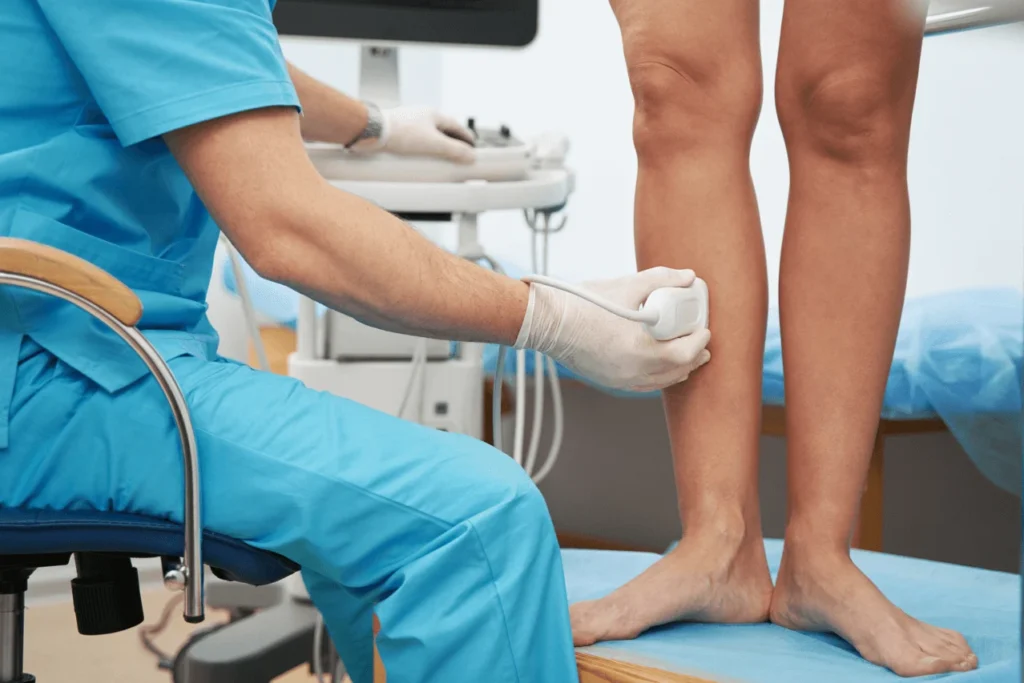
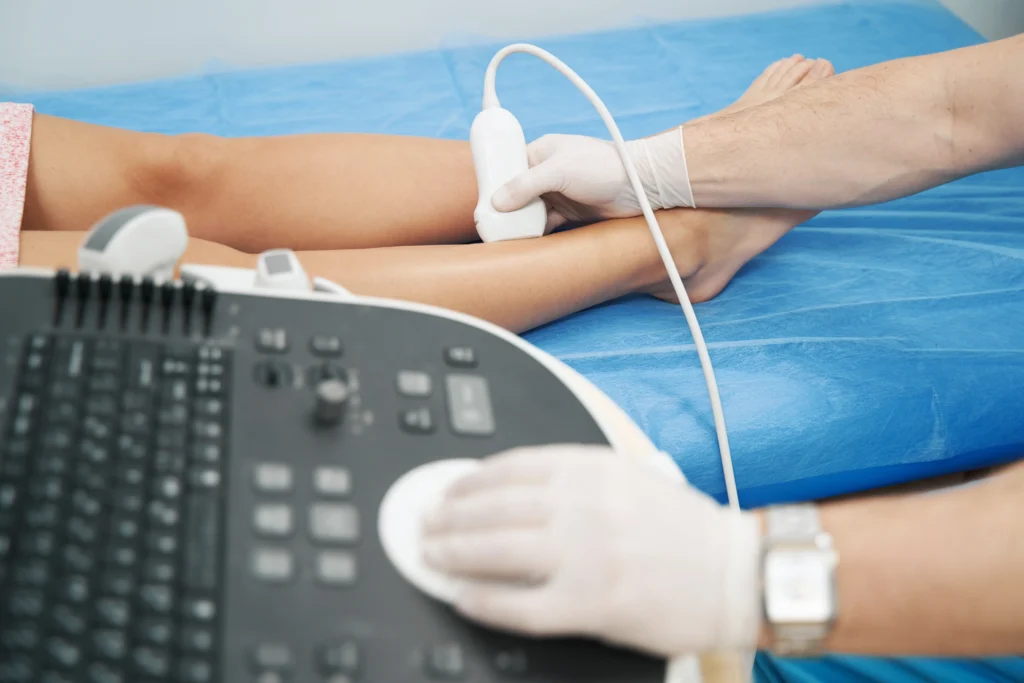
Maryland Vein Clinics is led by highly-skilled, board-certified vein doctors who diagnose and treat the root cause of your vein problems. Instead of offering a cookie-cutter treatment, our vein doctors administer duplex ultrasound tests to visualize the direction of blood flow in your leg veins and curate a personalized, minimally invasive vein treatment plan. You can find our vein clinics in Bethesda, Maryland — please schedule an appointment online.
Is homeopathy for varicose veins in legs useful?
If you’re looking for a cure for your varicose veins, you may have heard that homeopathy can help. Unfortunately, there is no scientific evidence to support this claim. Varicose veins occur because of damaged vein valves, and there’s no way to fix or repair the broken valves, so homeopathy is useless against vein problems. The only thing proven to work is minimally invasive treatments performed by a board-certified vein doctor. These include sclerotherapy, endovenous laser ablation, and ambulatory phlebectomy.
Sclerotherapy is a procedure in which a chemical solution is injected into the vein. This solution irritates the inner lining of the vein, causing it to collapse and seal shut. Endovenous laser ablation is a procedure in which a laser is used to heat and destroy the vein. Ambulatory phlebectomy is a procedure in which the veins are removed through small incisions in the skin. These procedures are safe and effective, and there is a good evidence base to support their use.
What happens if varicose veins are left untreated?
If you have varicose veins and wonder what will happen if you don’t treat them, you’re not alone. Many people think that varicose veins are just a cosmetic issue, but the truth is that if left untreated, varicose veins can lead to several serious health problems. Here’s a look at what can happen if you don’t treat varicose veins:
- Leg Ulcers: If left untreated, varicose veins can lead to skin ulcers. This is because the veins cannot circulate blood properly, which can cause the skin around the veins to break down. This can lead to an open wound that can become infected.
- Blood Clots: Another serious complication of untreated varicose veins is the formation of blood clots. When the veins are not working properly, blood can pool in them and clot. If a blood clot breaks free and travels to the lungs, it can be fatal.
- Bleeding: Another serious complication of varicose veins is bleeding. When the veins cannot circulate blood properly, the blood can begin to leak out of them. This can cause bruising and swelling. If the bleeding is severe, it can require hospitalization.
- Leg Swelling: If varicose veins are left untreated, the veins can become swollen and enlarged. This can cause pain and discomfort. In severe cases, the swelling can lead to tissue damage.
If you are suffering from varicose veins, it is important to seek vein treatment. The longer you delay the treatment, the worse your symptoms will become.
What causes early onset varicose veins?
Many factors can contribute to the early onset of varicose veins. Heredity is one of the most common causes, as veins can be passed down from generation to generation. Obesity, pregnancy, and standing or sitting for long periods can also pressure the veins and cause them to become varicose.
- Heredity: If your parents or grandparents had varicose veins, you might be more likely to develop them as well. This is because weak vein valves can be passed down generations.
- Obesity: Obesity is another common cause of early onset varicose veins. This is because being overweight puts extra pressure on the veins and can cause them to become varicose.
- Pregnancy: Pregnancy can also cause early onset varicose veins. This is because the added weight of the baby can put extra pressure on the veins, leading to a higher risk of collapsed vein valves, blood accumulation in leg veins, and varicose veins.
- Standing or Sitting for Long Periods of Time: Standing or sitting for long periods of time can also cause early onset varicose veins. If you don’t get enough exercise, blood accumulates in the leg veins, leading to blood accumulation and the formation of varicose veins.