Your varicose vein treatment journey starts with a thorough consultation and ultrasound diagnosis
If you have varicose veins, you’re not alone. In the United States, about 3 in 10 adults have varicose veins, according to the American College of Phlebology. Some people with varicose veins don’t have any symptoms, but most people may experience pain, fatigue, heaviness, aching, or burning. Some of the more advanced complications of varicose veins and underlying vein disease also include leg cramps, restless leg syndrome, skin discoloration, leg ulcers, and deep vein thrombosis.
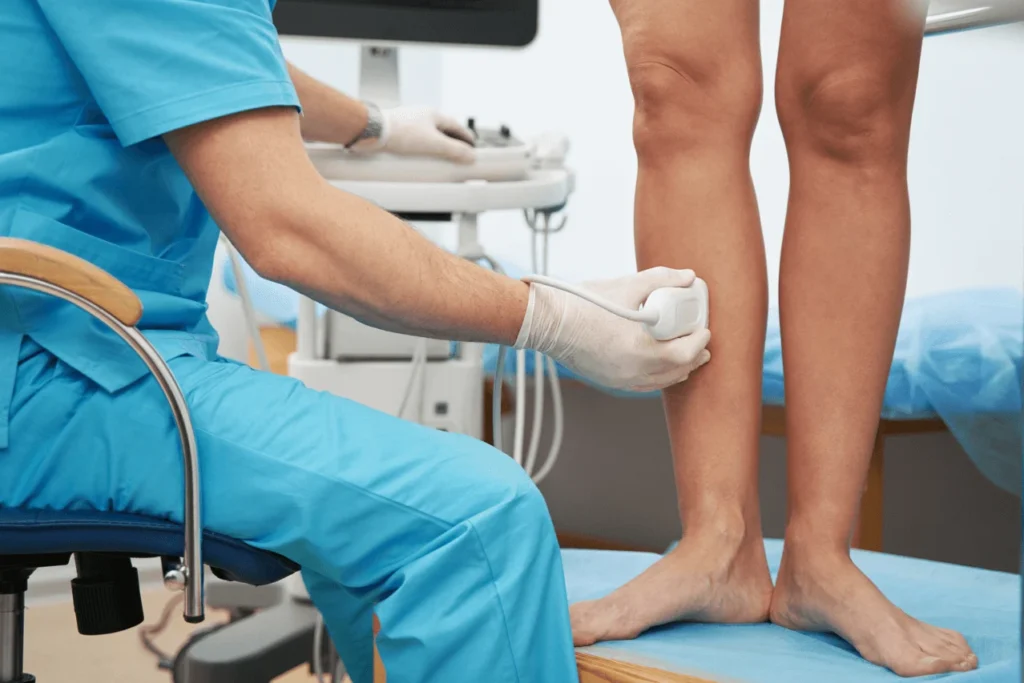
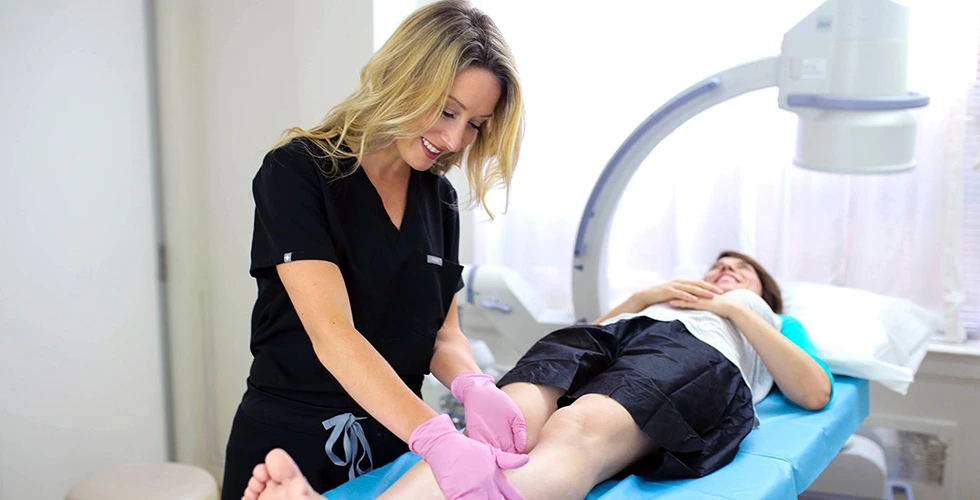
If you’re experiencing any of these symptoms, talk with your doctor. A thorough consultation and ultrasound diagnosis will help your doctor determine the best course of treatment for you. During your initial consultation, the vein doctor will examine your leg veins, discuss your goals and symptoms, and review your medical history. The vein doctor will also administer vascular imaging tests, such as a duplex ultrasound, to visualize the direction of blood flow in your leg veins.
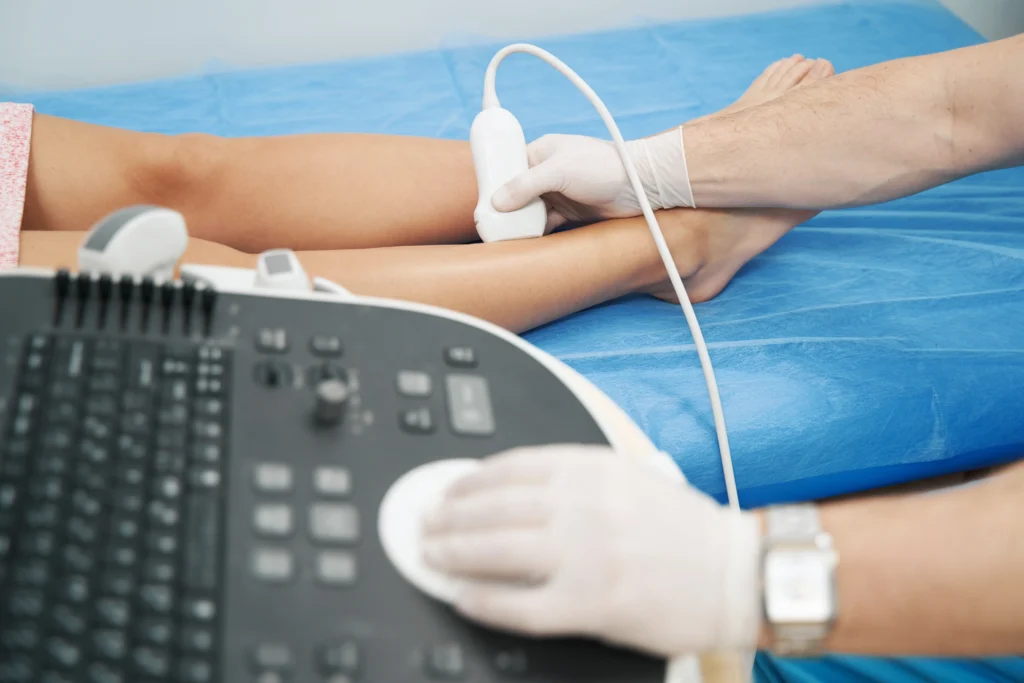
During a doppler ultrasound test, the vein doctor will apply a special gel to your legs and use an ultrasound handheld device to deliver sonic waves into your legs. The sonic waves will produce a visual representation of the inside of your leg veins on a computer screen. The vein doctor will interpret the results of your duplex ultrasound test to determine if you have chronic venous insufficiency and identify the diseased saphenous vein responsible for your vein problems.
Chronic venous insufficiency is usually the root cause of most of your vein problems. Venous insufficiency is a circulatory disorder caused by the collapse of vein valves. In healthy veins, the valves act as one-way doors that ensure smooth blood circulation to the heart, often against the force of gravity. When your vein valves collapse or malfunction, blood flows backward and accumulates in the leg veins, eventually leading to vascular dilation and the formation of bulging varicose veins and spider veins.
Diagnosing chronic venous insufficiency is an essential component of your vein treatment journey. If your vein doctor treats varicose veins without addressing the root cause, the varicose veins will inevitably return. Our vein clinic in Maryland always provides comprehensive vein treatments after a thorough diagnosis and evaluation. You can find our vein clinic in Bethesda, Maryland, just outside of Washington, DC. Please schedule an appointment to explore your varicose vein treatment options.

Our vein doctors diagnose and treat the root cause of varicose veins — venous insufficiency
After a thorough evaluation, if you are diagnosed with chronic venous insufficiency, our vein doctors will offer treatments for the root cause. We may use thermal energy, laser energy, or medical adhesives to seal or destroy the diseased saphenous vein responsible for your vein problems, which will improve blood circulation and treat varicose veins. The following is a description of the best minimally invasive treatments for vein disease.
Radiofrequency Ablation
Radiofrequency ablation (RFA) is a treatment that uses heat to destroy the damaged veins responsible for your vein problems. RFA is a minimally invasive procedure, which means it doesn’t require surgery. RFA works by heating the vein with radio waves via a specialized catheter. This destroys the vein, and the body then reroutes blood to other veins.
Laser Ablation
Laser ablation is a minimally invasive treatment for chronic venous insufficiency (CVI). It uses heat from a laser to seal the problem veins and improve blood flow. The vein doctor inserts a specialized laser fiber into the diseased vein and activates laser energy to destroy its walls. The diseased saphenous vein hardens into scar tissue and gets reabsorbed by the body.
VenaSeal
VenaSeal is a safe, minimally invasive treatment for chronic venous insufficiency. The vein doctor makes a small incision on your skin’s surface to insert a catheter and deliver a medical-grade adhesive into the diseased vein. The vein glue seals the diseased vein shut and reroutes the accumulated blood into healthier leg veins.
Ambulatory phlebectomy is the most effective way to remove varicose veins from the legs
Ambulatory phlebectomy is a minimally invasive surgical procedure used to remove varicose veins from your legs. The procedure is performed under local anesthesia and does not require hospitalization. During the procedure, your surgeon will make small incisions in your skin and remove the affected veins. The incisions are so small that they usually don’t require stitches. Ambulatory phlebectomy is effective in treating varicose veins and can improve the appearance of your legs. The procedure is also associated with a low risk of complications.
Is it painful to remove varicose veins?
Removing varicose veins is a minimally-invasive procedure that is generally well-tolerated by patients. The specific technique used will determine whether local anesthesia or intravenous sedation is used. The type of anesthesia used will also affect how much pain is experienced during and after the procedure.
Some people may experience discomfort during the procedure, but this can be controlled with medication. Recovery from the procedure is usually quick, and most people experience little to no pain afterward. In some cases, though, people may experience bruising, swelling, or soreness. These side effects are usually mild and go away within a week.
What happens if varicose veins are left untreated?
Varicose veins are twisted, enlarged veins that are most often seen in the legs. They can be painful and cause a range of symptoms, including leg swelling, cramping, and fatigue. If left untreated, varicose veins can lead to more serious problems, such as blood clots, ulcers, and skin infections. If you are concerned about your varicose veins, talk to your vein doctor.