What is laser therapy for spider veins?
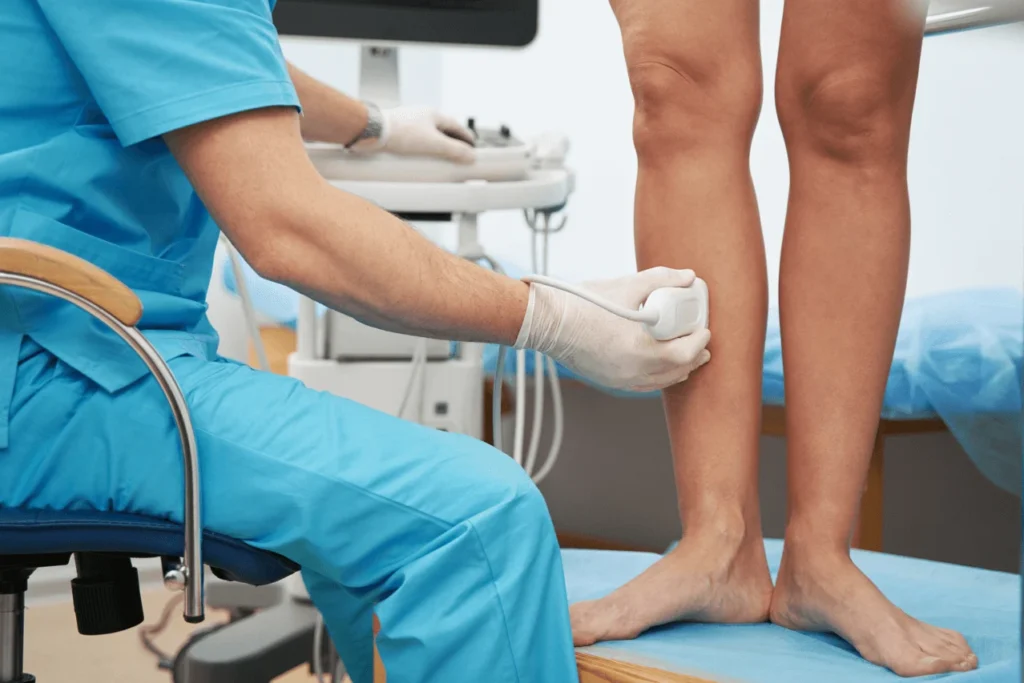
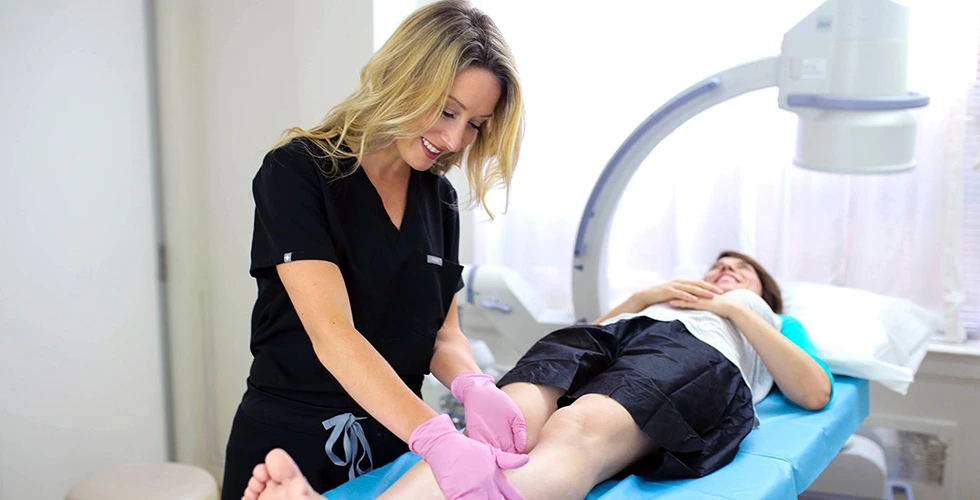
Laser therapy is a non-invasive spider vein treatment generally recommended in medical spas. Laser therapy involves using a specialized laser device to channel wavelengths of light energy into the damaged blood vessels on your skin. The pigment on the spider veins absorbs the light energy, which can induce a shrinking effect. Over time, the spider veins shrink and start fading away from the skin’s surface. Laser therapy is a cosmetic treatment for spider veins, which means it can only remove spider veins — it doesn’t treat the root cause of spider veins.
Laser therapy is popular in medical spas because it can be performed by cosmetic providers and technicians without medical supervision from vein doctors. But in terms of effectiveness, laser therapy isn’t nearly as effective or reliable as sclerotherapy spider vein treatments. That’s because laser therapy can gradually reduce the prominence of unhealthy spider veins, but it can’t treat the root cause. Furthermore, laser therapy for spider veins has a high rate of recurrence, i.e., the spider veins often return after a few weeks or months.
The Vein Clinic in Maryland is a state-of-the-art vein clinic specializing in comprehensive treatments for spider veins and underlying vein diseases. Our vein doctors examine your leg veins, diagnose the root cause of spider veins, and offer sclerotherapy injections to remove unwanted spider veins. If you have underlying vein disease, we also provide treatments to address the root cause, ensuring long-lasting results. We maintain a perfect track record, as evidenced by our 5-star testimonials. Please schedule an appointment for your spider vein treatments today.
Does laser therapy work?
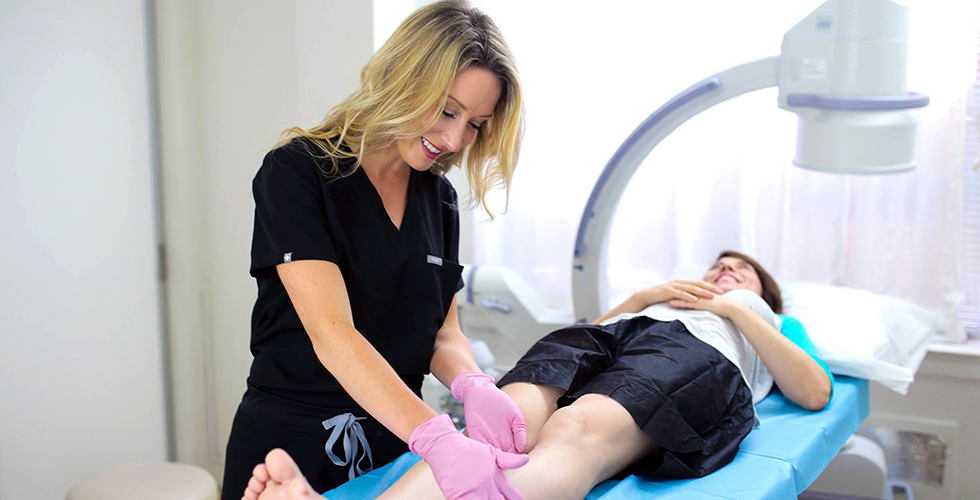
Laser therapy involves delivering laser energy to shrink the walls of unhealthy spider veins. This procedure only works on extremely small spider veins, and it has a relatively low success rate. You need to undergo multiple laser therapy sessions spaced a few weeks apart to remove the unhealthy spider veins. Furthermore, cosmetic providers can’t diagnose or treat the root cause of spider veins, so there’s a strong chance that your spider veins will return. All things considered, laser therapy is a relatively ineffective and unreliable treatment for spider veins.
Our board-certified vein doctors prefer sclerotherapy over laser therapy for spider veins. They examine your leg veins, diagnose and treat the root cause of spider veins, and then perform sclerotherapy treatments to ensure optimal and long-lasting results. Laser therapy is generally reserved for spider veins on the face and feet. The face and feet are regions with dense vein-artery connections, and accidentally injecting sclerosant into the arteries can be dangerous, so laser therapy is a better alternative for spider veins on the face and feet.
How long does it take for spider veins to disappear after laser treatment?
The spider veins will gradually fade and disappear 2 to 6 weeks after your laser therapy session. You may also need multiple laser therapy sessions for optimal results.
Is laser spider vein removal painful?
Laser therapy is a completely painless spider vein treatment. Your skin might feel a little warm because of laser energy, but there’s no pain.
How often should you get laser for spider veins?
Most patients need 2 to 6 laser therapy sessions spaced 4 to 6 weeks apart for optimal results.
Can spider veins get worse after laser treatment?
Your spider veins might look a little darker after the laser treatment, and you may also experience mild skin matting and staining. The discoloration will gradually recede over a few weeks.
Sclerotherapy: the superior alternative to laser for spider veins
Sclerotherapy is the ideal alternative to laser therapy for spider veins. Sclerotherapy involves injecting a sclerosant medicine into the unhealthy spider veins to irritate their vein walls, making them swell shut. The spider veins eventually harden into scar tissues and get reabsorbed by the body. The spider veins fade away from the skin’s surface over 3 weeks. Sclerotherapy is performed by licensed vein doctors who may also diagnose underlying vein disease, the root cause of your vein problems.
What happens during sclerotherapy?
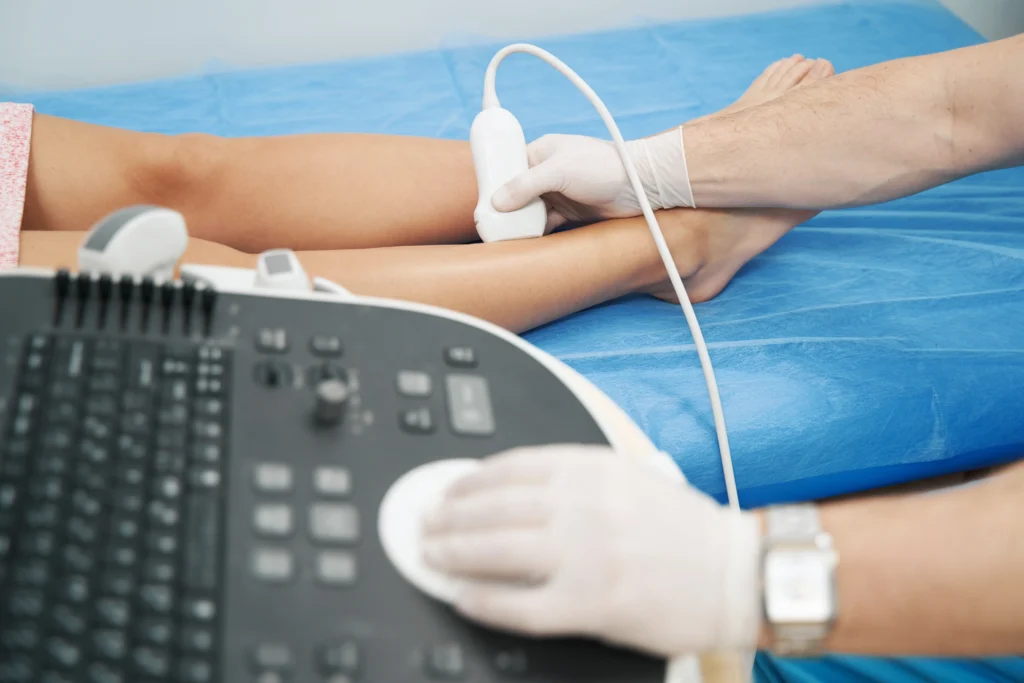
During sclerotherapy, the vein doctor administers local anesthesia to numb your skin’s surface. After selecting the ideal units of the sclerosant medicine, the vein doctor carefully injects them into the spider veins — one injection per vein. The vein doctor may also use ultrasound guidance to deliver the sclerosant medicine into deeper spider veins. The treatment concludes within 30 minutes.
What are the side effects of sclerotherapy?
Sclerotherapy causes minimal post-treatment side effects, such as redness, swelling, tenderness, discomfort, and bruising around the spider veins. The spider veins may also look darker on your skin because they harden into scar tissues. Some patients also experience temporary skin discoloration.
How many treatments does it take to get rid of spider veins?
Most patients need 2 to 3 sclerotherapy sessions to remove all unwanted spider veins. The total number of sessions depends on your unique condition — the more spider veins you have, the higher the number of sessions.
What is better for spider veins: laser or injections?
Sclerotherapy injections are superior to laser therapy in every way possible. Each sclerosant injection effectively closes one spider vein, ensuring guaranteed results. But with laser therapy, you need multiple sessions to make some of the spider veins fade. Sclerotherapy is also performed by licensed vein doctors, whereas laser therapy is generally offered by cosmetic providers in medical spas.
The Vein Clinic in Maryland is led by highly-skilled and board-certified vein doctors specializing in cutting-edge minimally invasive treatments for spider veins and varicose veins. We always diagnose and treat the root cause of your vein problems to ensure safe and reliable results. If you have spider veins, please schedule an appointment to explore your vein treatment options.