If you’re dealing with the discomfort and embarrassment of varicose veins or unsightly spider veins, you’re not alone. At Maryland Vein Clinic, we specialize in minimally invasive treatments for spider veins and varicose veins. We offer cutting-edge, minimally invasive treatments after performing a thorough ultrasound diagnosis. Our board-certified vein doctors identify and treat the root cause of your vein problems to ensure safe, consistent results. You can find our vein clinic in Maryland at 10215 Fernwood Rd, Suite 301, Bethesda, just outside of Washington, D.C., in Silver Spring, Maryland. Please schedule an appointment online.

Minimally Invasive Treatments
When it comes to treating vein issues like varicose veins and spider veins, undergoing surgery can be intimidating. Fortunately, modern medicine offers a less invasive and gentler alternative – minimally invasive treatments. Minimally invasive treatments are significantly less traumatic to the body compared to traditional surgical methods. This means smaller incisions or injections, reduced scarring, and quicker recovery. Patients can often return to their daily activities shortly after the procedure, ensuring optimal convenience.
Sclerotherapy
Sclerotherapy is a minimally invasive treatment for spider veins. During this procedure, a carefully chosen sclerosant solution is injected into the affected spider veins. The solution is typically a hypertonic saline solution or a detergent-like substance. Upon injection, the sclerosant triggers a series of biochemical reactions within the vein.
Firstly, it irritates the inner lining of the vein, leading to inflammation. This prompts the vein walls to stick together, causing the vein to collapse and lose shape. As a result, the blood that previously flowed through the treated spider vein is rerouted to healthier veins nearby. Over time, the collapsed vein is gradually absorbed by the body, ultimately fading away from view.
Endovenous Laser Ablation (EVLA)
Endovenous Laser Ablation (EVLA) is a highly effective treatment for larger varicose veins. During this procedure, a thin laser fiber is inserted into the targeted varicose vein. The laser emits highly concentrated, precisely controlled light energy.
This intense laser energy serves two essential functions. Firstly, it generates heat within the vein, which leads to the alteration in the structure of the vein’s collagen proteins. This causes the vein walls to contract and eventually seal shut. Secondly, the heat from the laser also damages the cells lining the vein, further preventing blood flow through the treated varicose vein. The body’s natural healing processes kick in, gradually absorbing and eliminating the closed vein while rerouting blood flow to healthier veins.
Radiofrequency Ablation
Radiofrequency Ablation, like EVLA, uses heat energy to achieve the closure of problematic veins. During the procedure, a specialized catheter equipped with a radiofrequency electrode is inserted into the varicose vein under ultrasound guidance.
The radiofrequency energy emitted from the electrode generates controlled heat, which, when applied to the vein walls, causes them to contract. The heat also damages the vein’s cells, further ensuring the closure of the treated varicose vein. As the body’s natural processes take over, the sealed vein is absorbed and replaced by healthy tissue, restoring proper blood flow.
VenaSeal
VenaSeal uses a medical adhesive to seal off varicose veins. During this procedure, a small amount of VenaSeal medical adhesive is injected directly into the targeted varicose vein. The adhesive works by creating a secure bond within the vein, effectively sealing it shut. This adhesive is biocompatible and remains stable within the body.
The sealed vein is no longer functional, and over time, the body naturally absorbs it, while rerouting blood through adjacent healthy veins. VenaSeal’s minimally invasive approach offers the advantage of being virtually painless, as it eliminates the need for thermal energy.
ClariVein
ClariVein represents an innovative approach to varicose vein treatment, combining mechanical agitation and medication to achieve thorough and lasting results. During the procedure, a specialized catheter equipped with a rotating wire tip is inserted into the varicose vein. The rotating wire tip mechanically agitates the vein’s inner lining, creating micro-injuries that enhance the absorption of the medication. Simultaneously, a sclerosant medication is infused into the vein. This leads to vein closure and eventual absorption by the body.
Ambulatory Phlebectomy
Ambulatory phlebectomy is a surgical procedure for the removal of surface varicose veins. During this procedure, tiny incisions are made over the affected area where bulging varicose veins are visible. Through these small incisions, specialized hooks are used to gently grasp and remove the targeted veins. The procedure is precise, minimizing trauma to surrounding tissues.
Unlike traditional vein stripping, ambulatory phlebectomy leaves virtually no scarring and offers patients a quick recovery period. This technique eliminates bulging veins and enhances both the cosmetic appearance of the legs and the comfort of the patient.
Personalized Treatment Plans
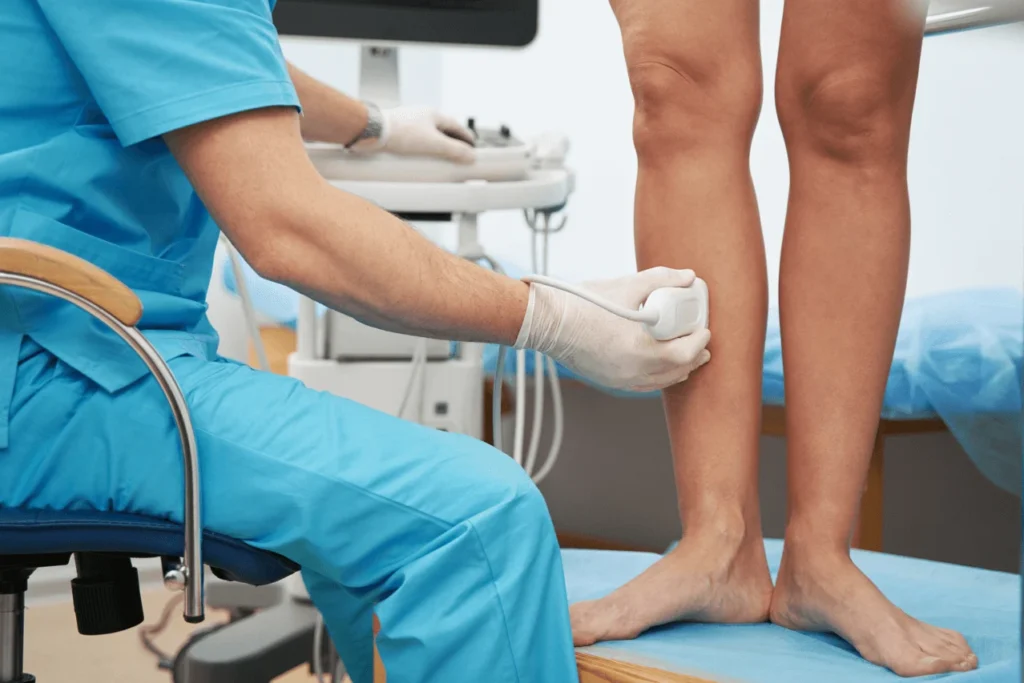
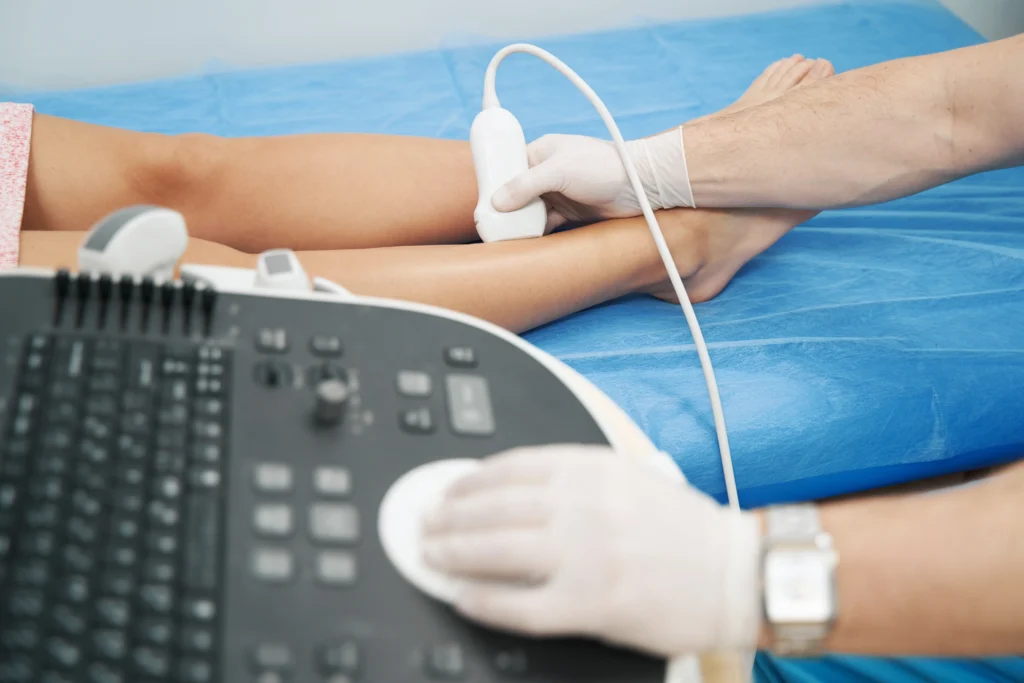
At Maryland Vein Clinic, we curate personalized treatment plans for every patient. Before any vein treatment, our vein doctors use advanced diagnostic techniques, including vascular imaging and duplex ultrasound to identify the underlying causes of each patient’s vein issues. Vascular imaging and duplex ultrasound provide an unprecedented view of the circulatory system, enabling our vein doctors to visualize blood flow patterns, vein structure, and any abnormalities within the venous network.
Vascular Imaging
Vascular imaging encompasses various imaging modalities, including Doppler ultrasound and venography. Doppler ultrasound relies on the Doppler effect, which assesses the change in frequency of sound waves bounced off moving blood cells. By analyzing the Doppler shifts, vein doctors can gauge the direction and velocity of blood flow, identifying areas of reflux (backward flow) or obstruction.
Duplex Ultrasound
Duplex ultrasound is a combination of traditional ultrasound and Doppler ultrasound. It provides real-time images of the vein’s structure and detailed information about blood flow. Through duplex ultrasound, our vein doctors can precisely locate the problematic veins, determine their size, and assess the extent of venous insufficiency. With this knowledge, our vein doctors can craft a treatment plan tailored to address the unique needs of the individual.
Board-Certified Vein Doctors
When you choose Maryland Vein Clinic, you can rest assured that your vein care is in the capable hands of board-certified vein doctors who have dedicated years of their professional lives to the study and practice of venous medicine. Our board-certified vein doctors have completed rigorous training and education in the specialized field of vein care.
Moreover, our vein doctors are unwavering in their dedication to remaining at the forefront of the latest advancements in vein treatment. The field of venous medicine is continually evolving, with new techniques, technologies, and research emerging regularly. Our board-certified vein doctors actively engage in ongoing education, attending conferences, seminars, and workshops to stay updated on the latest breakthroughs and treatment modalities.
Free Insurance Verification
At Maryland Vein Clinic, we understand the challenges that patients face when dealing with insurance matters. To alleviate this burden and provide you with clarity and peace of mind, we offer a valuable service—free insurance verification.
Our dedicated team takes the time to comprehensively review your insurance plan and assess the specific benefits available for your vein treatment. The process of insurance verification begins even before your first appointment with us. Our insurance team will reach out to gather your information, following which they’ll review the terms and conditions of your insurance plan to help you maximize your coverage.
Maryland Vein Clinic Locations
Maryland Vein Clinic is conveniently located to serve residents of Maryland, Washington, D.C., and surrounding areas. Our primary location is at: 10215 Fernwood Rd, Suite 301, Bethesda, Maryland. This clinic is situated just outside of Washington, D.C. in Silver Spring, Maryland, making it easily accessible to those in the nation’s capital and its suburbs.
Finding the Right Vein Clinic for You
Selecting the right vein clinic is a significant step in your journey toward healthier, more comfortable legs. Here are some additional tips to help you make an informed decision:
- Consultation: Schedule consultations with several clinics to meet the doctors, tour the facilities, and discuss your condition.
- Ask Questions: Inquire about the doctor’s experience, the proposed treatment plan, expected outcomes, and any potential risks or side effects.
- Patient Reviews: Read patient reviews online to get an idea of other patients’ experiences with the clinic and its doctors. Consistent positive reviews are a good sign.
- Insurance Coverage: Check with each clinic regarding their accepted insurance plans and payment options. Understanding the financial aspect of your treatment is crucial.
- Follow Your Instincts: Ultimately, trust your instincts. Choose a vein clinic where you feel comfortable and confident in the care you will receive.
FAQs
What causes varicose veins and spider veins?
Varicose veins and spider veins can have various causes. The primary factor is often a condition called venous insufficiency, where the valves in your veins don’t function properly, leading to blood pooling in the veins. Other contributing factors can include genetics, pregnancy, obesity, prolonged sitting or standing, and hormonal changes.
Do vein treatments hurt?
Minimally invasive vein treatments are well-tolerated and cause minimal discomfort. Many procedures are performed with local anesthesia, ensuring that you’re comfortable throughout the process. Patients often report feeling only mild sensations, if any, during the treatments.
How long does it take to recover from vein treatment?
Recovery time varies depending on the specific treatment and the individual patient. However, most minimally invasive procedures have a short recovery period. Patients can resume their normal activities immediately, although some precautions and restrictions may apply.
Will my insurance cover vein treatments?
The coverage of vein treatments by insurance can vary depending on your specific insurance plan and the medical necessity of the treatment. At Maryland Vein Clinic, we offer free insurance verification to help you understand your coverage and maximize your benefits.
Visit Maryland Vein Clinics
When it comes to finding the best vein clinics in Maryland, Maryland Vein Clinic stands out as a top choice. Our commitment to providing minimally invasive treatments, personalized care, and the expertise of our board-certified vein doctors make us a trusted option for individuals seeking relief from varicose veins and spider veins. Schedule a consultation with Maryland Vein Clinic, and take the first step towards healthier, more comfortable legs.