What doctor treats vein problems?
Your veins are responsible for delivering blood from your tissues back to your heart. They are equipped with one-way valves that prevent blood from flowing backward as it travels up your legs. When these valves are not functioning properly, blood can pool in your veins and cause various problems, including pain, inflammation, spider veins, and leg ulcers.
If you are experiencing problems with your veins, you must see a vein doctor. A phlebologist is a doctor who specializes in diagnosing and treating vein disorders, such as spider veins, varicose veins, deep vein thrombosis, and chronic venous insufficiency. Phlebologists also have specialized training in minimally invasive vein treatments.
Phlebologists or vein experts will determine the root cause of your vein problems and recommend the best course of treatment, which may include conservative treatments and minimally invasive procedures. If you are concerned about your veins or experiencing pain, swelling, or other problems, please consult board-certified vein experts near your location.

How can I find the best vein doctor around me?
There are several ways to find the best vein doctor around you. The first is to look for ratings and reviews from patients. When looking for ratings and reviews, it is important to read them carefully. Look for reviews that mention the doctor’s bedside manner, their experience, and the treatment results. It is also important to ensure the review is from a reliable source. You should generally look for vein doctors with 5-star ratings and reviews on Google.
If you have varicose veins, spider veins, or other vein issues, you want to be sure to find a board-certified vein doctor. Numerous doctors claim to be experts in treating vein issues, but not all are board-certified. Board certification from the American Board of Venous and Lymphatic Medicine is important because it indicates the doctor has undergone extensive training and passed a rigorous exam. This ensures they are up-to-date on the latest treatments and know how to safely and effectively treat the root cause of vein problems.
If you have varicose veins, it is important to find a vein doctor who specializes in minimally invasive vein treatments, such as endovenous laser ablation, radiofrequency ablation, and sclerotherapy. Vein doctors specializing in minimally invasive vein treatments can help you get rid of varicose veins without having surgery. These treatments are much less invasive than vein surgery. They can help you eliminate your varicose veins without dealing with the pain, recovery time, and complications associated with surgery.
Where can I find the best clinic for varicose veins?
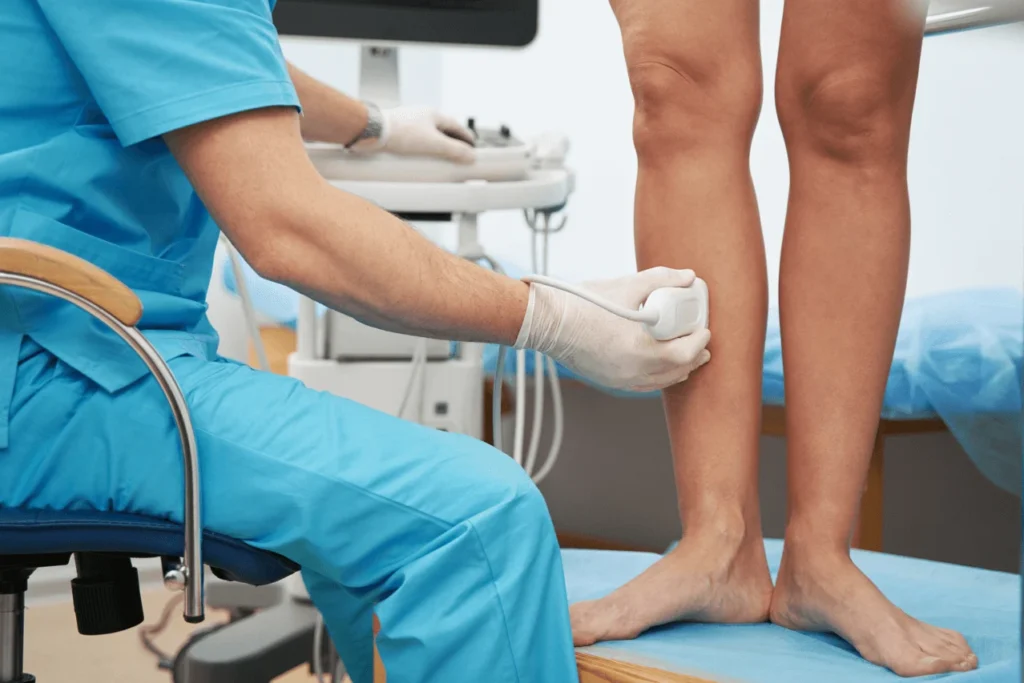
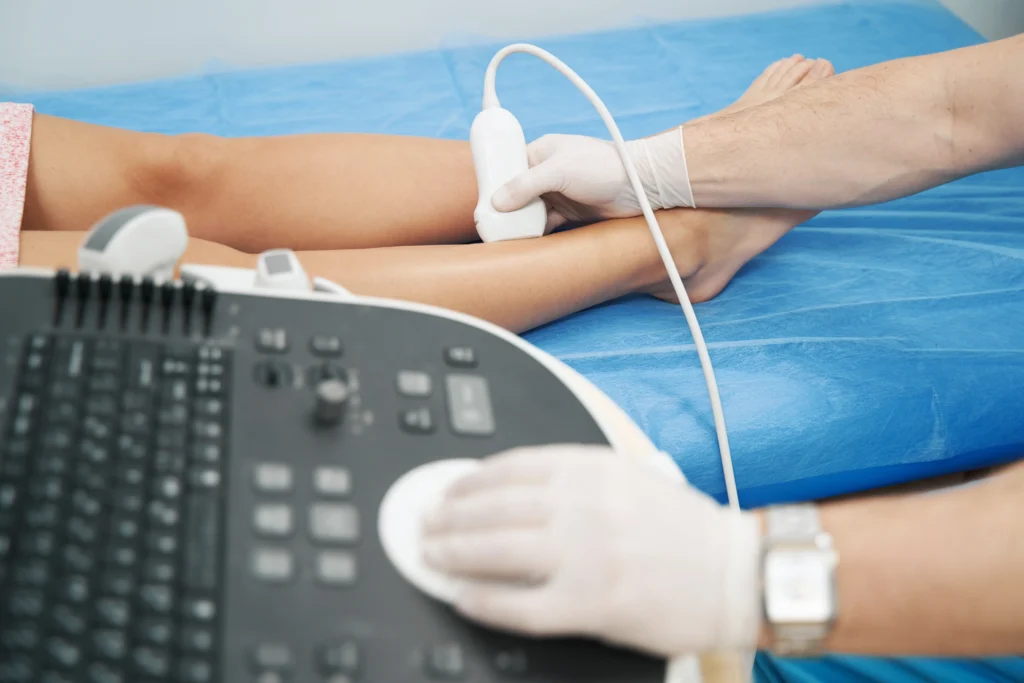
Maryland Vein Clinic is led by a team of board-certified and fellowship-trained vein experts specializing in minimally invasive vein treatments. Our vein doctors always diagnose and treat the root cause of your vein problems — not just the symptoms. During your evaluation, the vein doctor will examine your leg veins, discuss your symptoms, and administer duplex ultrasound tests to visualize the direction of blood flow in your leg veins. After confirming the diagnosis, the vein doctor will curate a personalized varicose vein treatment plan.
In or around the nation’s capital, you can find our vein clinic at 10215 Fernwood Rd, Suite 301, Bethesda, Maryland, just outside Washington D.C., in Silver Spring. Please schedule an appointment at the best clinic for varicose veins in Maryland.
Should I get my varicose veins treated?
If you’re dealing with varicose veins, you’re not alone—it’s estimated that about half of all adults in the United States have some form of venous disease. For many people, varicose veins and spider veins (smaller, dilated blood vessels that are also visible through the skin) are simply cosmetic issues. But for others, varicose veins can cause achy or heavy legs, burning, itching, or restlessness. In severe cases, varicose veins can lead to ulcers, blood clots, or other problems.
If you have varicose veins, you must consider treatment for the following reasons.
1. Varicose veins are a common problem—and treatments have come a long way.
While you may feel like you’re the only one dealing with varicose veins, they’re a very common problem. According to the American College of Phlebology, about 50 to 55 percent of women and 40 to 45 percent of men in the United States have some form of venous disease. And as the population ages, the numbers are only expected to increase.
Fortunately, treatments for varicose veins have come a long way in recent years. Endovenous ablation—a minimally invasive procedure that uses heat or a laser to destroy the abnormal veins—is now the gold standard for treating varicose veins. This procedure is safe, effective, and has a very low risk of complications.
2. Varicose veins can cause serious health problems.
While varicose veins are often considered a cosmetic issue, they can lead to several serious health problems. Varicose veins can cause pain, swelling, itching, and restlessness in the legs. In severe cases, they can lead to ulcers, blood clots, deep vein thrombosis, profuse bleeding, and other complications. If you’re dealing with any of these problems, please talk to your vein doctor.
3. Varicose veins are more than just a cosmetic issue.
While some people may think of varicose veins as a cosmetic issue, they can significantly impact your quality of life. Varicose veins can cause pain, swelling, itching, and restlessness in the legs. They’re also symptomatic of chronic venous insufficiency, a dangerous circulatory disorder caused by collapsed or malfunctioning vein valves. You must undergo vein treatments to improve your health and quality of life.
4. There are a variety of treatment options available.
Numerous minimally invasive treatment options are available for varicose veins. Endovenous ablation is the gold standard for treatment, but several other options are available, including sclerotherapy, venaseal, and ambulatory phlebectomy. All minimally invasive treatments are in-office, outpatient procedures that conclude within an hour and don’t involve downtime, allowing you to resume your daily activities immediately.
5. Treatments are usually covered by insurance.
Varicose vein treatments are considered to be medically necessary. Most varicose vein treatments are covered by all major medical insurance, including Medicare. Our vein clinic in Maryland also offers free insurance verification, so you know what you’ll have to pay for your vein treatment in advance.